
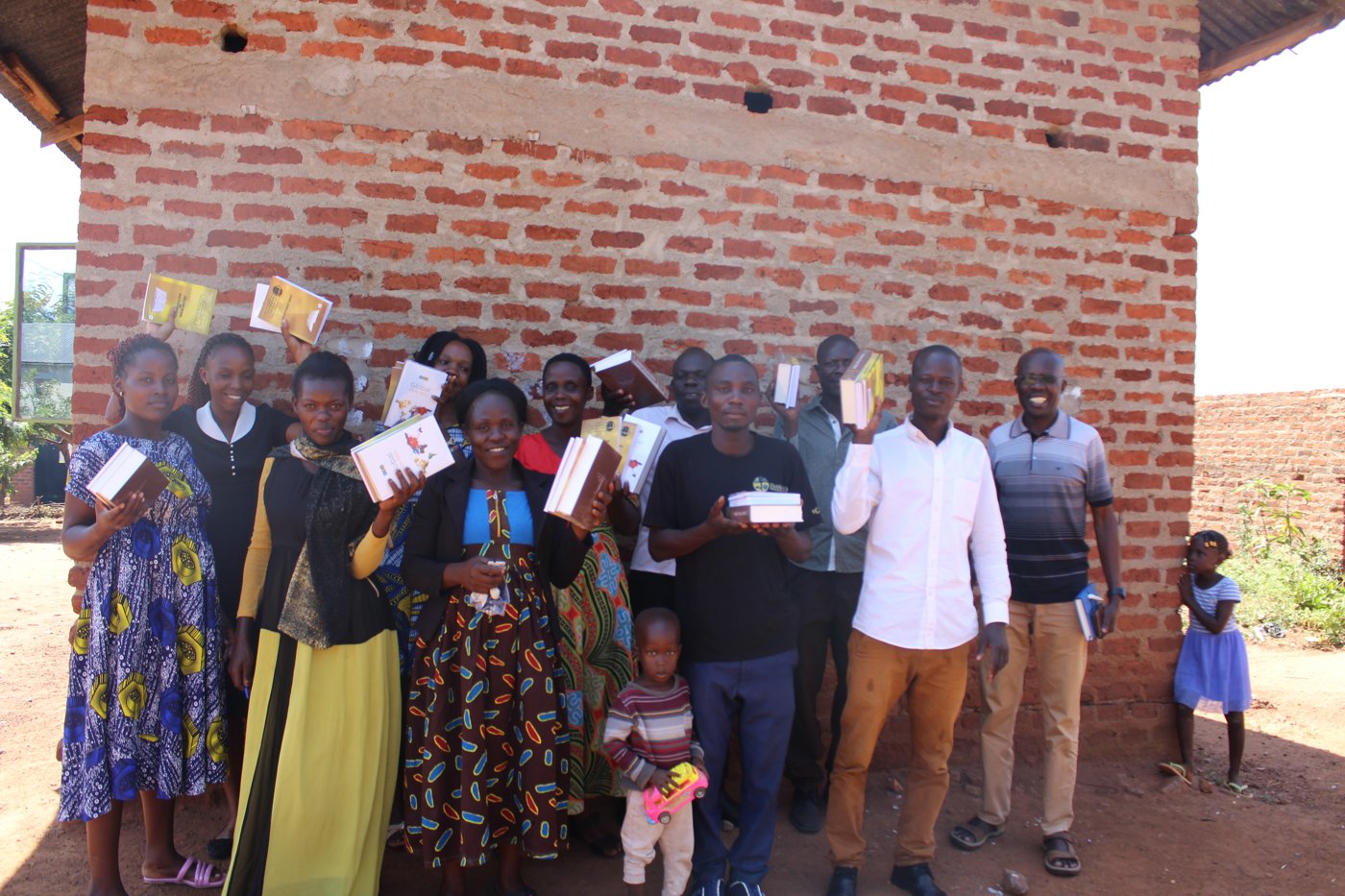
Pastor Martin Onen is an indigenous Ugandan church leader serving as the Overseer of Community Churches across Northern and Eastern Uganda. His ministry extends far beyond the leadership of one congregation.
He is investing his life in raising pastors and emerging leaders, strengthening churches, planting new congregations, and helping families and communities become spiritually, socially, and economically resilient.
Through his leadership with Gulu Bible Community Church (GBCC), Pastor Martin has helped develop a model of ministry that seeks to bring people to Christ while also equipping churches and communities to become healthy, self-sustaining, and multiplying centres of transformation.
Multiplying Disciples, Leaders, and Churches
As Overseer of Community Churches, Pastor Martin provides spiritual oversight, pastoral mentoring, and leadership development across a growing network of churches and ministry leaders. His focus is not simply increasing the number of congregations, but helping churches become strong, locally led, and capable of reproducing ministry within their own communities.
GBCC's ministry journey has resulted in more than 50 churches planted, with thousands of lives impacted through the Gospel — churches increasingly built to develop their own leaders and resources rather than remain dependent on outside support.
One of Martin's most significant investments is in people. He mentors pastors and emerging leaders, helping them develop biblical understanding, spiritual maturity, leadership capacity, and practical ministry skills. Recent leadership development activities have involved more than 200 pastors and church leaders.
Northern and Eastern Uganda contain communities where access to trained pastors, biblical resources, and ministry support remains limited, particularly in areas with poor infrastructure. Martin is working to strengthen ministry teams so they can travel farther, reach underserved communities, and provide pastors with the training materials, Bibles, and practical resources required to establish healthy churches.
From Church Ministry to Holistic Transformation
Pastor Martin's leadership recognizes that healthy churches should contribute to healthy families and communities. Churches within his network are being encouraged to engage in agriculture, livelihood development, children's ministry, education, and other sustainability initiatives — moving communities from dependency toward local ownership, dignity, and sustainability.
A one-acre coffee farming model is being developed for more than 700 parents whose children participate in the Child Development Project, giving families a practical, sustainable livelihood rather than long-term dependence on outside assistance.
Financial inclusion for roughly 2,000 coffee farmers is taking shape through a SACCO (Savings and Credit Cooperative Organization) that Martin helped mobilize — enabling farmers to save collectively, access financial services, and invest in their farms.
ERAS92, a hub for creativity, innovation, and enterprise that Martin is working to bring to the community, aims to give young people a platform to discover their talents, acquire practical skills, and access employment — becoming creators and community leaders rather than simply recipients of assistance.
Stories That Show the Difference
One of the strongest testimonies to Martin's leadership is the multiplication of churches. The story does not end when a new congregation is established — churches planted in Anaka, Lira, Adjumani, and Kitgum have gone on to plant additional churches of their own, resulting in five further churches.
Leaders raising leaders. Churches planting churches. Communities becoming centres of transformation.
Adjumani offers another example: a model that integrates church ministry, pastoral training, and agriculture — demonstrating how spiritual formation can be paired with practical skills and community sustainability.
Martin also understands that healthy churches require healthy leaders. The involvement of more than 200 pastors in leadership and pastoral wellbeing development reflects a growing emphasis on strengthening those who carry the responsibility of shepherding God's people. Leadership development isn't an add-on for Martin — it's central to the long-term health and multiplication of the Church.
What Excites Martin Most About the Future
Martin's greatest excitement isn't about building larger programs. It's about seeing a generation of indigenous African leaders equipped to carry the Gospel and transform their communities long after today's leaders have moved on.
He envisions churches throughout Northern and Eastern Uganda becoming healthy, self-sustaining, and capable of planting other churches — hundreds more pastors equipped, remote communities reached, and families, farms, and churches all building real capacity of their own.
Dependency → Capacity → Ownership → Sustainability → Multiplication.
Perhaps the most important part of Martin's vision is succession. He does not want the future of the ministry to depend on one individual. He wants leaders developed who can lead, mentor others, and multiply the work — so that his measure of success is not what he accomplishes personally, but what continues to multiply through the people he equips.